The Structure Behind Experiences
Samsara, karma, maya, Brahman, and Kalki — pages 42-51
“What I saw on the path was not scenery. It was life revealing how it works.”
Structure Overview
Until this point, the journey was personal—steps taken, breaths counted, lessons learned through effort and failure. But somewhere between walking, waiting, and witnessing, a wider understanding began to unfold.
I realized that my experience was not unique. It followed a structure—one that life itself seems to follow, again and again.
This chapter is not about belief. It is about seeing clearly.
Life moves between birth and death. In between, it unfolds through samsāra—the cycle of becoming, repeating, forgetting, remembering. Karma guides the movement. Not as punishment or reward, but as cause and consequence.
And all of this is veiled by māyā—not illusion as falsehood, but illusion as misdirected attention.
Nothing here is accidental. Yet nothing is fixed.

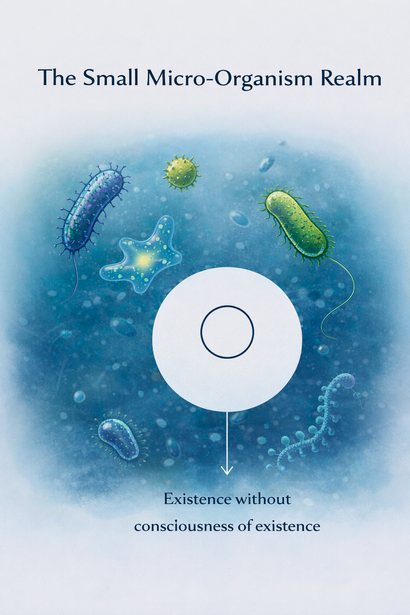
The Small Micro-Organism Realm
existence without consciousness of existence
At the most fundamental level of existence lies the smallest realm. A world invisible to the naked eye, yet alive, active, and complete in itself.
Micro-organisms exist within us and around us. They live, respond, survive, and perish—entirely governed by natural law and biological programming. There is no reflection here. No questioning. No search for meaning or liberation.
Life functions, but self-awareness is absent.
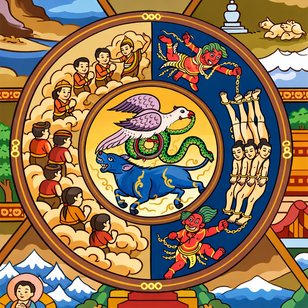
The Human Realm
only realm where awakening is possible
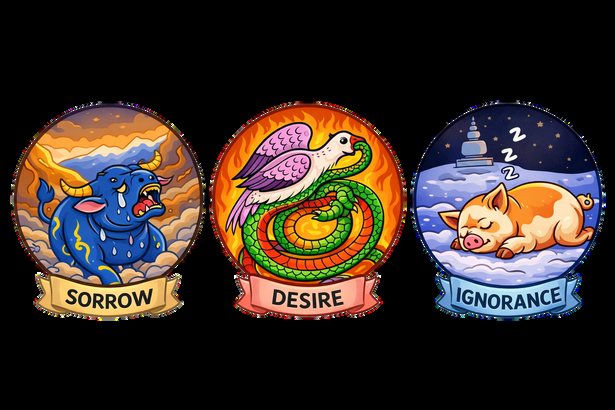
Above all other realms, the human realm stands unique. It is bound by birth, aging, sickness, and death. It is also ruled by three deep forces:
- Sorrow (Dukha)
- Desire (Kāma / Tṛṣṇā)
- Ignorance (Avidyā)
Because of these, humans act. Because they act, karma is created. Yet this same realm carries something rare: the capacity to observe.
Suffering exists here. But so does awareness.
The God Realm (Deva Realm)
higher comfort, not higher truth
Above the human realm lies the God realm. Here, life is long. Pleasure is abundant. Sorrow is minimal. Yet ignorance remains.
Gods enjoy power and refinement, but they are not liberated. They still exist within samsāra. This is why scriptures speak of gods competing, fighting, becoming deluded.
Gods may grant protection, prosperity, or fulfillment of desires. But they cannot grant liberation.
Māyā — The Infinite Veil
distraction from the absolute
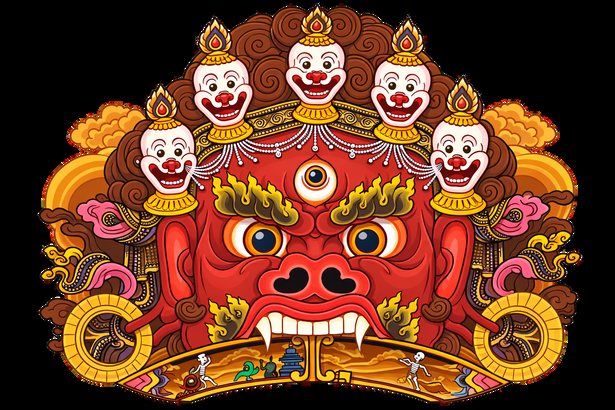
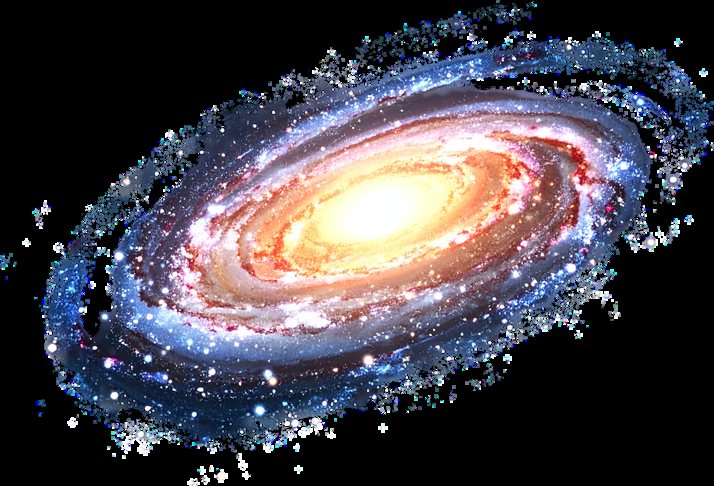
Above the God realm lies Māyā, symbolized by infinity. Māyā is not darkness because it is evil. It is dark because it is unknowable. Even gods cannot surpass it.
Māyā is:
- The answer to “How?”
- The question behind “Why?”
- The reason existence appears beautiful, meaningful, and confusing
It creates: Form, Identity, Time, Separation. Without Māyā, experience would not exist. With Māyā, truth is obscured.
The Brahman State
The purpose of human life is not achievement, but realization of Brahman.
Beyond Māyā lies Brahman. Here:
- Sorrow dissolves
- Desire dissolves
- Ignorance dissolves
- Identity is no longer personal
- Awareness remains, but without division
This is the state of Brahma-Jñāna—knowing reality as it is. Freedom exists with awareness.
Para-Brahman — Nirvāṇa
Beyond even Brahman lies Para-Brahman. This is not a higher experience. It is the end of experience.
No observer. No awareness. No becoming. Birth and death cease entirely.
This is Nirvāṇa—not as attainment, but as cessation.
The universe is not chaotic. It is layered. And the human life—brief, fragile, uncertain—stands at the exact point where seeing becomes possible.
To understand this structure is not to escape life, but to walk through it without confusion.
What Is Kalki? (Not What We Were Told)
Kalki is often spoken of as a future warrior. A figure who will arrive at the end of time, destroy darkness, and restore order.
But when I looked deeply—not into scriptures, but into life itself—Kalki did not appear as a person riding a horse.
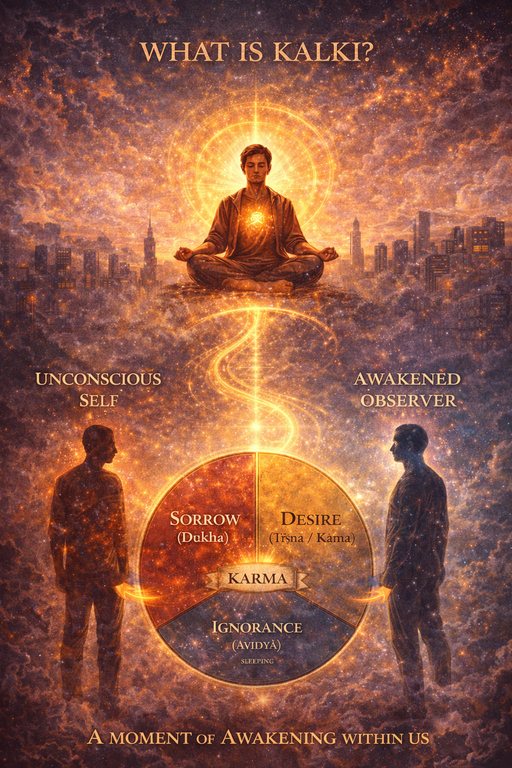
Kalki appeared as a moment. A moment when ignorance collapses. A moment when awareness interrupts habit. A moment when life stops running unconsciously.
Kalki, as I see it, is not coming. Kalki is happening.
One Person, Two Personalities
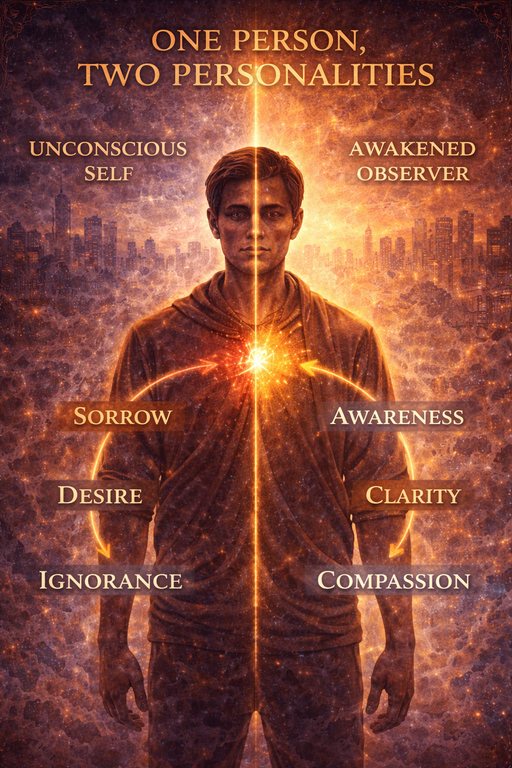
Kalki is not separate from us. Kalki exists within one person, but expresses as two personalities.
The first is the unconscious self—driven by sorrow, desire, and ignorance. The second is the awakened observer—aware of sorrow, desire, and ignorance.
Both live in the same body. Both breathe the same breath. Both walk the same world.
The difference is not the body. The difference is attention.
When attention sleeps, the unconscious personality runs life. When attention awakens, Kalki appears.
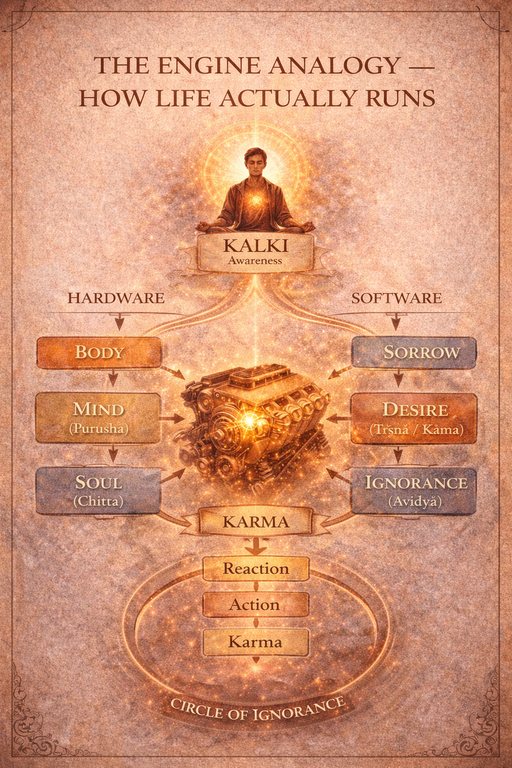
The Engine Analogy — How Life Actually Runs
Let us take a simple example. Suppose a baby is born.
What nature (prakriti) provides at birth are three essentials—what I call the hardware of the engine:
- Body
- Mind (Purusha)
- Soul / Consciousness (Chitta)
These three are neutral. They are capable, but inactive by themselves.
What makes this engine run is not the hardware—it is the software.
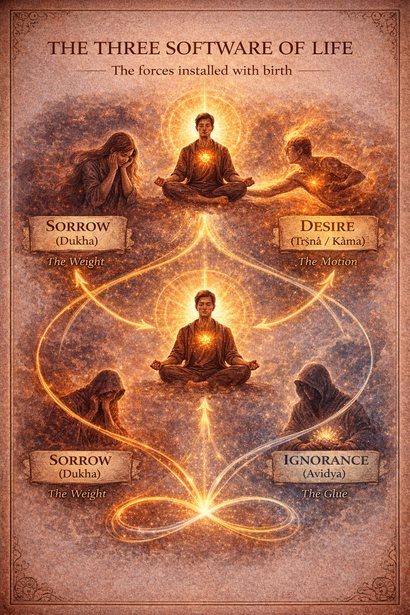
The Three Software of Life:
- Sorrow (Dukha)
- Desire (Tṛṣṇā / Kāma)
- Ignorance (Avidyā)
These are not moral failures. They are structural programs.
Sorrow gives depth to experience. Desire gives movement and motivation. Ignorance gives continuity and identity.
Together, they keep the engine of samsara running. Without them, the world would not function. With them, the world repeats itself.
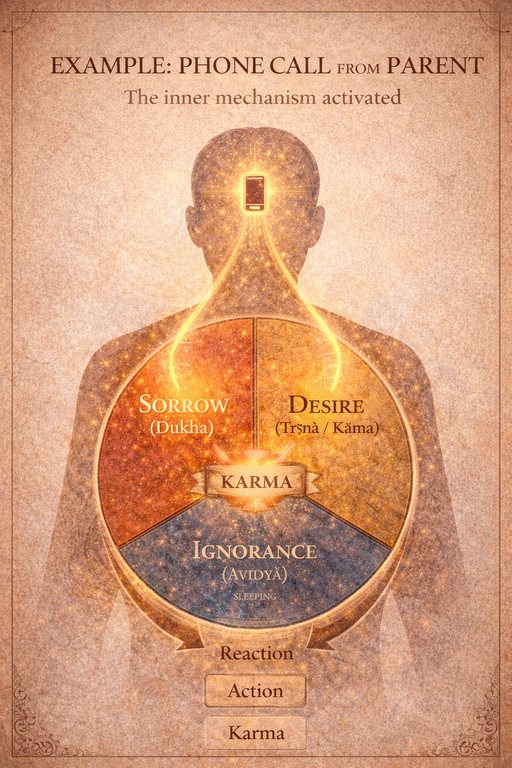
Where Kalki Enters
Here is the subtle truth: at any given moment, two of these software are active, and one remains asleep.
Kalki does not destroy these programs. Kalki reveals which ones are running.
A Living Example — The Phone Call
Suppose you are living abroad. Your parents call you. You say, “I am talking to my parents.”
But observe carefully. At that moment:
- Desire is active (attachment, love, longing, responsibility)
- Sorrow may also be active (distance, separation, emotional weight)
- Ignorance remains asleep
So it is not you who is speaking. It is sorrow and desire speaking through you.
The same happens when a friend calls. Sometimes desire and ignorance speak. Sometimes sorrow and ignorance speak. Rarely does pure awareness speak.
We believe we are acting, but most of the time, we are being executed by software.
The Limitation We Live Inside
This is why life feels repetitive. We think: “I decided this.” But often, a combination of sorrow, desire, and ignorance decided for us.
We are not free—we are functional.
Kalki’s role is vital here. Kalki is the moment when:
- ignorance begins to wake up
- the software is seen as software
- the observer steps back into the driver’s seat
Kalki does not stop karma. Kalki changes who is doing karma.
As long as ignorance sleeps, life is driven. When ignorance awakens, life is lived.
This awakening is not sudden destruction. It is quiet recognition. And that recognition—that is Kalki.
Journal
“What software is running now? Sorrow, desire, or ignorance — or awareness?”